
Sydney is one of the most heavily treed capital cities in Australia, and that is exactly why tree removal Sydney wide is such a common, and commonly misunderstood, job. Between towering blue gums on the North Shore, brittle liquidambars in the Inner West and camphor laurels quietly lifting driveways across the Hills District, most property owners will face a serious tree decision at some point.
This guide walks through when a tree genuinely needs to come down, what the law says, how the work is actually performed, what it costs, and how to pick a contractor who will not leave you with a wrecked lawn and a fine from council.
Why Sydney Trees Create Unique Problems
Sydney’s mix of sandstone soils, clay pockets, coastal wind and summer storm cells puts real stress on urban trees. Shallow-rooted species planted in the 1960s and 70s are now mature, oversized for suburban blocks, and increasingly failure-prone. Add narrow side access, overhead power lines and neighbouring rooflines within a few metres, and a job that looks simple from the footpath becomes technical rigging work.
That is the core reason professional tree removal Sydney crews exist. It is rarely the cutting that is difficult. It is controlling where several tonnes of timber lands.
The most common problem species
- Camphor laurel – invasive, aggressive roots, frequently targeted for removal
- Liquidambar – surface roots that crack paths and block stormwater
- Cocos palm – declared a weed by many councils, heavy seed drop
- Radiata pine – shallow plated roots, high windthrow risk
- Eucalyptus (various) – sudden limb drop in heat stress
When a Tree Actually Needs to Come Down
A good arborist will talk you out of removal as often as into it. Removal is the right call when the tree presents a risk that cannot be reduced by pruning, cabling or crown reduction.
Structural defects
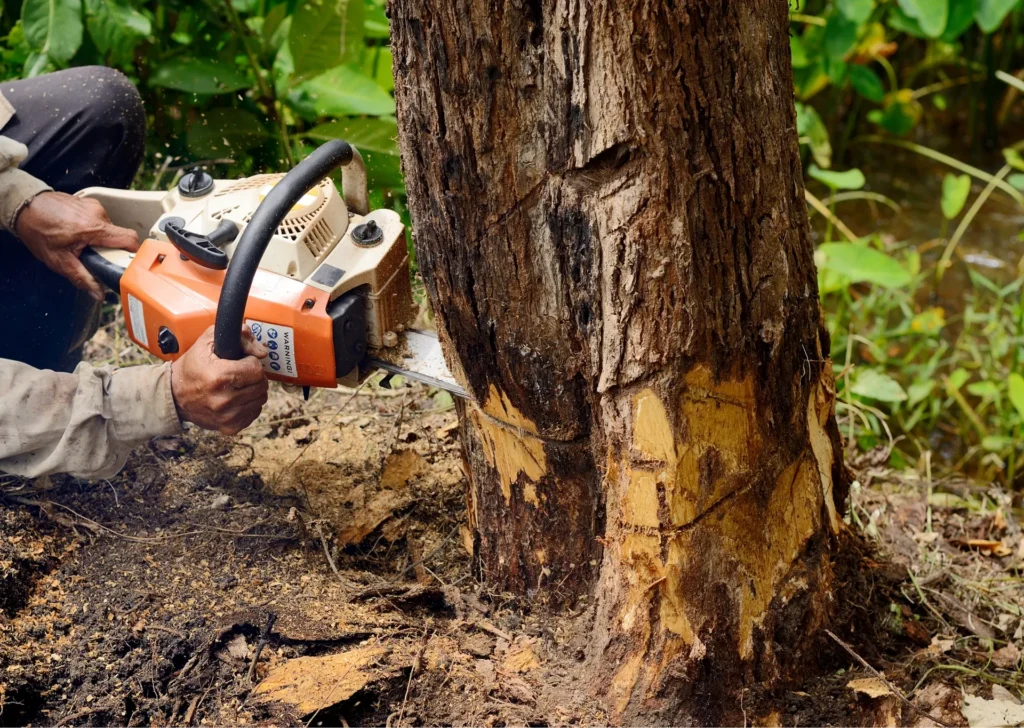
Included bark at major unions, large cavities, fungal fruiting bodies at the base, and significant lean with soil heaving on the opposite side are all serious indicators. A qualified assessor will test suspect wood with a bore cut or sounding mallet before recommending anything.
Damage to structures and services
Roots invading sewer lines, footings lifting, or a canopy permanently fouling a roof are legitimate grounds. Councils generally want evidence, not opinion, so a written arborist report matters here.
Storm and decline
After a major east coast low, tree removal Sydney demand spikes overnight. Trees that survived the storm but lost a third of their canopy are often better removed than nursed along for two more seasons.
Development and access
If a tree sits inside a proposed building footprint, removal is usually handled through the development application rather than a separate tree permit.
Do You Need Council Approval in Sydney?
Short answer: usually yes. Trees on private land in NSW are protected under Chapter 2 of the State
Environmental Planning Policy (Biodiversity and Conservation) 2021, and each council layers its own
Development Control Plan on top. Check the Service NSW tree-removal guidance before applying. Removing a protected tree without consent can attract very substantial fines.
Common exemptions across Sydney councils include trees under a set height (often 3 to 5 metres), species on a council exempt list, declared noxious weeds, and dead trees that pose an imminent risk. The thresholds vary between Ku-ring-gai, Inner West, Parramatta and Blacktown, so never assume the rules from one suburb apply in another.
If your property is close to bushland, the 10/50 Vegetation Clearing Scheme may allow removal of trees within 10 metres of a home without approval, but only inside a designated entitlement area. Always check the official tool on the day you intend to clear.
A reputable tree removal Sydney contractor will tell you upfront whether a permit is needed and will often prepare the application for you.
How Professional Tree Removal Works
1. Site assessment
The crew walks the site, identifies the target tree, checks for power lines, pools, septic systems, glass, and neighbouring assets, then decides between straight felling, sectional dismantling, crane-assisted removal or a zip line rig.
2. Exclusion zone
A drop zone is established and controlled. Nobody enters it while cutting is underway. This single control prevents the majority of serious tree work injuries.
3. Climbing or elevated work platform
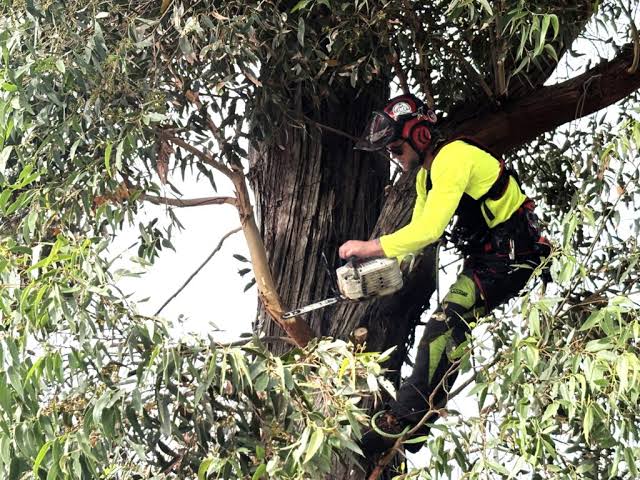
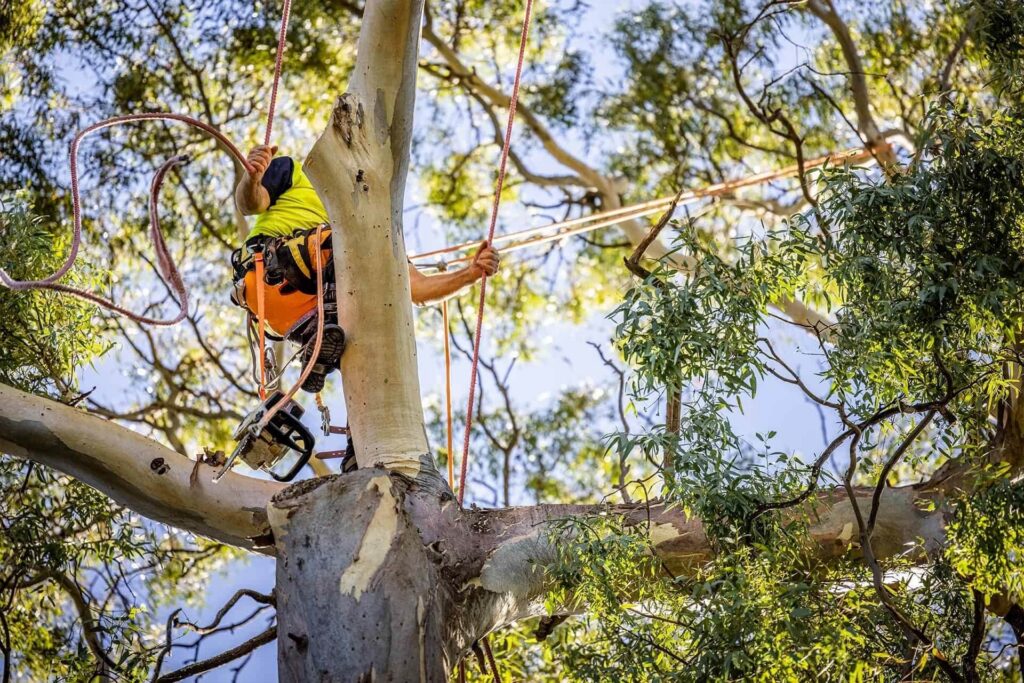
On tight blocks, a climber ascends and dismantles the tree from the top down. Larger limbs are roped and lowered on a friction device rather than dropped.
4. Processing
Brush goes through the chipper, trunk wood is cut into rounds and either milled, split for firewood or removed as green waste.
5. Stump treatment
Most quotes treat stump grinding as a separate line item. Decide before the crew arrives, because bringing a grinder back later costs more.
What Tree Removal Costs in Sydney
Pricing is driven by height, access, proximity to structures and disposal volume, not by species alone. As a working range for 2026:
- Small tree under 5 metres, clear access: $400 to $900
- Medium tree 5 to 12 metres: $900 to $2,500
- Large gum or pine over 15 metres with rigging: $2,500 to $8,000+
- Crane-assisted removal on a tight block: add $1,500 to $4,000
- Stump grinding: $120 to $500 per stump depending on diameter
Beware of quotes dramatically below market. Cheap tree removal Sydney operators are frequently uninsured, and if a limb goes through your neighbour’s roof, that becomes your problem.
Choosing the Right Contractor
Ask for four things before you sign anything: a minimum AQF Level 3 qualification for the climbing crew (Level 5 for reports), a current public liability certificate of at least $20 million, workers compensation cover, and a written scope that spells out exactly what is being removed and what is being taken away.
Tree work carries genuine risk. SafeWork NSW has repeatedly flagged serious incidents involving falls from height, being struck by falling limbs and contact with overhead power lines. A crew that turns up in thongs with a ladder and a chainsaw is not a bargain.
What Happens to the Timber
Good operators recycle almost everything. Brush becomes garden mulch, hardwood rounds become seasoned firewood, and the rest goes to a licensed organics facility. UTS research on Australia’s urban tree canopy shows why retaining suitable canopy matters. Under NSW law, both the owner of the waste and the transporter are responsible for proving it reached a place that can lawfully accept it, so ask where your green waste is going.
